
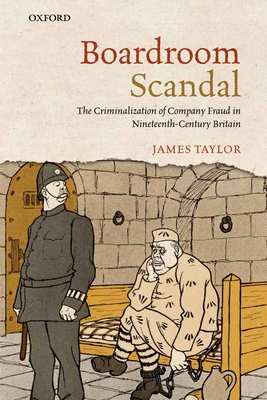
Boardroom Scandal: The Criminalization of Company Fraud in Nineteenth-Century Britain - Hardcover
by James Taylor
$193.99
Quantity
01
Pay over time for orders over $35.00 with
Offers & Perks
Earn 193 points with this purchase
Added to your rewards balance after checkout.
100 points welcome bonus
Create an account and start with extra points.
Availability:In StockContributor:James TaylorTheme:Aspects (Academic)/Crime/Criminology, Chronological Period/19th Century, Cultural Region/BritishPublish date:6/14/2013Pages:312
Languages:EnglishPublisher:Oxford University PressISBN-13:9780199695799ISBN-10:0199695792UPC:9780199695799Book Category:True Crime, Social Science, HistoryBook Subcategory:Criminology, EuropeBook Topic:Great BritainSize:9.20 x 6.10 x 1.00 inchesWeight:0.613Product ID:SC2Q4KXN3D
Should businessmen who commit fraud go to prison? This question has been asked repeatedly since 2008. It was also raised in nineteenth-century Britain when the spread of corporate capitalism created enormous new opportunities for dishonesty. Historians have presented Victorian Britain as a haven for white-collar criminals, beneficiaries of a prejudiced criminal justice system which only dealt harshly with offences by the poor. Boardroom Scandal challenges these beliefs. Based on an unparalleled sample of legal cases - many examined here for the first time - James Taylor presents a radical new interpretation of the relationship between capitalism and the law. Initially, there were no criminal sanctions against publishing false prospectuses, concealing losses in balance sheets, and even misappropriating company money. But parliament became convinced of the need to criminalize these practices to protect the culture of stock market investment on which mid-Victorian prosperity increasingly rested. Persuading judges to play along was harder, with many invoking the principle of caveat emptor to exonerate defendants. But by the end of the century, successful prosecutions of company executives were commonplace. These trials performed multiple functions: they stabilized confidence in times of crisis; they dramatized the class blindness of the law; and they were increasingly seen as essential as faith in a self-regulating economy ebbed. The criminalization of fraud, therefore, has far-reaching implications for our understanding of nineteenth-century Britain. It also has relevance today in light of the on-going economic crisis and the issues it raises regarding business ethics and the role of the state.
Languages:EnglishPublisher:Oxford University PressISBN-13:9780199695799ISBN-10:0199695792UPC:9780199695799Book Category:True Crime, Social Science, HistoryBook Subcategory:Criminology, EuropeBook Topic:Great BritainSize:9.20 x 6.10 x 1.00 inchesWeight:0.613Product ID:SC2Q4KXN3D
James Taylor is a senior lecturer in the Department of History at Lancaster University. He is the author of Creating Capitalism and co-author of Shareholder Democracies.
Publisher: Oxford University Press
Contributor(s)
Author
Free shipping on orders over $75. Standard shipping takes 3-7 business days. Returns accepted within 30 days of purchase.