
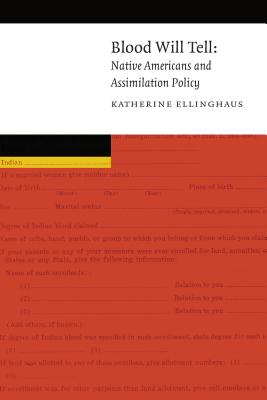
Blood Will Tell: Native Americans and Assimilation Policy - Hardcover
$39.99
$40.00
Quantity
01
Pay over time for orders over $35.00 with
Offers & Perks
Earn 39 points with this purchase
Added to your rewards balance after checkout.
100 points welcome bonus
Create an account and start with extra points.
Availability:In StockContributor:Katherine EllinghausSeries:New Visions in Native American and Indigenous StudiesTheme:Chronological Period/1851-1899, Chronological Period/1900-1949, Chronological Period/20th Century, Ethnic Orientation/Native AmericanPublish date:8/1/2017Pages:234
Languages:EnglishPublisher:University of Nebraska PressISBN-13:9780803225435ISBN-10:0803225431UPC:9780803225435Book Category:HistoryBook Subcategory:Indigenous, United StatesBook Topic:19th Century, 20th CenturySize:9.00 x 6.00 x 0.69 inchesWeight:0.499Product ID:SC3DYK0K91
Blood Will Tell reveals the underlying centrality of "blood" that shaped official ideas about who was eligible to be defined as Indian by the General Allotment Act in the United States. Katherine Ellinghaus traces the idea of blood quantum and how the concept came to dominate Native identity and national status between 1887 and 1934 and how related exclusionary policies functioned to dispossess Native people of their land. The U.S. government's unspoken assumption at the time was that Natives of mixed descent were undeserving of tribal status and benefits, notwithstanding that Native Americans of mixed descent played crucial roles in the national implementation of allotment policy. Ellinghaus explores on-the-ground case studies of Anishinaabeg, Arapahos, Cherokees, Eastern Cherokees, Cheyennes, Chickasaws, Choctaws, Creeks, Lakotas, Lumbees, Ojibwes, Seminoles, and Virginia tribes. Documented in these cases, the history of blood quantum as a policy reveals assimilation's implications and legacy. The role of blood quantum is integral to understanding how Native Americans came to be one of the most disadvantaged groups in the United States, and it remains a significant part of present-day debates about Indian identity and tribal membership. Blood Will Tell is an important and timely contribution to current political and scholarly debates.
Languages:EnglishPublisher:University of Nebraska PressISBN-13:9780803225435ISBN-10:0803225431UPC:9780803225435Book Category:HistoryBook Subcategory:Indigenous, United StatesBook Topic:19th Century, 20th CenturySize:9.00 x 6.00 x 0.69 inchesWeight:0.499Product ID:SC3DYK0K91
Katherine Ellinghaus has a Hansen Lectureship in History in the School of Historical and Philosophical Studies at the University of Melbourne. She is the author of Taking Assimilation to Heart: Marriages of White Women and Indigenous Men in Australia and the United States, 1887-1937 (Nebraska, 2006) and coeditor of Historicising Whiteness: Transnational Perspectives on the Construction of Identity.
Publisher: University of Nebraska Press
Contributor(s)
Author
Free shipping on orders over $75. Standard shipping takes 3-7 business days. Eligible items may be returned within 30 days of delivery. Conditions apply.