
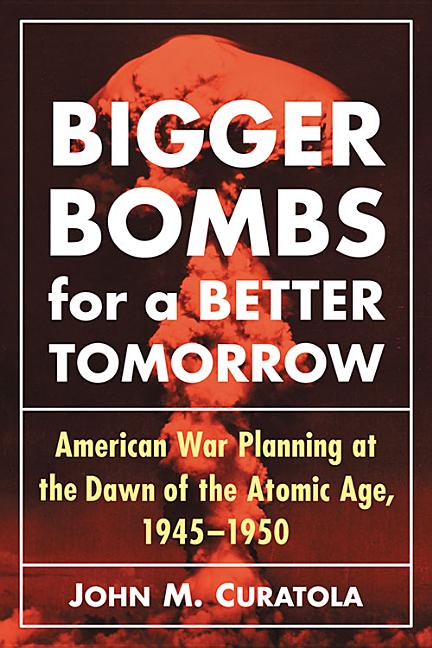
Bigger Bombs for a Brighter Tomorrow: The Strategic Air Command and American War Plans at the Dawn of the Atomic Age, 1945-1950 - Paperback
Pay over time for orders over $35.00 with
Offers & Perks
Earn 32 points with this purchase
Added to your rewards balance after checkout.
100 points welcome bonus
Create an account and start with extra points.
Right after World War II, the United States felt secure in its atomic monopoly. With the American "Pax Atomica" in place, the free world held an apparent strategic advantage over the Soviet bloc and saw itself as a bulwark against communist expansion.
But America's atomic superiority in the early postwar years was more fiction than fact. From 1945 until 1950, the U.S. atomic arsenal was poorly coordinated, equipped and funded. The newly formed Atomic Energy Commission inherited from the Manhattan Engineer District a program suffering from poor organization, failing infrastructure and internal conflict. The military establishment and the Air Force's Strategic Air Command little knew what to do with this new weapon.
The Air Force and the AEC failed to coordinate their efforts for a possible atomic air offensive and war plans were ill-conceived, reflecting unrealistic expectations of Air Force capabilities and possible political outcomes. This lack of preparedness serves as a case study in the tenuous nature of American civilian-military relationships.
Instructors considering this book for use in a course may request an examination copy here.
Contributor(s)
Author
Free shipping on orders over $75. Standard shipping takes 3-7 business days. Eligible items may be returned within 30 days of delivery. Conditions apply.