
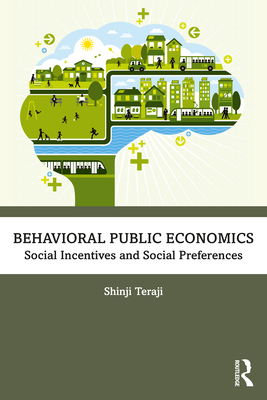
Behavioral Public Economics: Social Incentives and Social Preferences - Paperback
Pay over time for orders over $35.00 with
Offers & Perks
Earn 58 points with this purchase
Added to your rewards balance after checkout.
100 points welcome bonus
Create an account and start with extra points.
Behavioral Public Economics shows how standard public economics can be improved using insights from behavioral economics. Public economics typically lists four market failures that may justify government intervention in markets--imperfect competition (or natural monopoly), externalities, public goods, and asymmetric information. Under the rational choice paradigm ('agents choose what is best for them'), public economics has examined the welfare effects of policy. Recent research in behavioral economics highlights a fifth market failure--individuals may make mistakes in pursuing their own well-being. This book calls for a rethinking of assumptions of individual behavior and provides a good foundation for public economic theory.
Key features:
- Introduces behavioral perspectives into public economics.
- Explains why economic incentives often undermine social preferences.
- Reveals that social incentives matter for public policy.
This book will be an invaluable resource for researchers and postgraduate students in public economics, behavioral economics, and public policy.
Shinji Teraji is Professor of Economics at Yamaguchi University, Japan. His research is mainly concerned with behavioral economics, institutional economics, and economic methodology.
Contributor(s)
Author
Free shipping on orders over $75. Standard shipping takes 3-7 business days. Eligible items may be returned within 30 days of delivery. Conditions apply.