
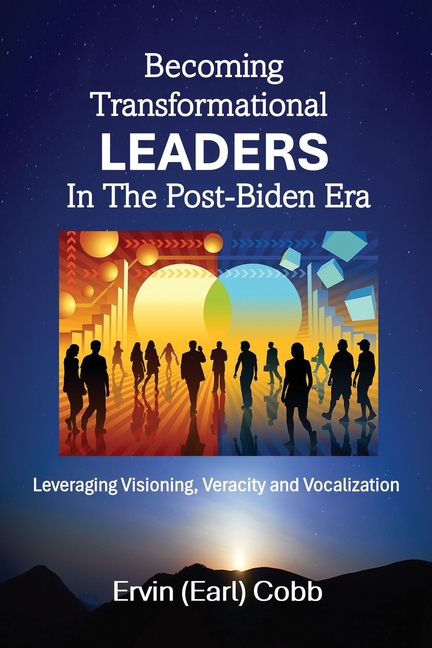
Becoming Transformational Leaders In The Post-Biden Era: Leveraging Visioning, Veracity and Vocalization - Paperback
Pay over time for orders over $35.00 with
Offers & Perks
Earn 12 points with this purchase
Added to your rewards balance after checkout.
100 points welcome bonus
Create an account and start with extra points.
The book Becoming a Transformational Leader in the Post-Biden Era discusses the current state of American democracy and the need for transformational leaders to foster critical thinking and a sense of common good. It emphasizes the importance of educating the public about the dangers of partisanship and authoritarianism.
The author identifies a significant shift in American governance towards authoritarianism, which threatens democratic values. He suggests Transformational leaders are positioned to encourage critical thinking and promote the common good. In the book he presents a novel communications strategy called, Leveraging Vision, Veracity and Vocalization (LV3), to counteract partisanship and psychological polarization.
He also reflects on the historical context of American governance and the importance of maintaining democratic principles.
The book builds a strong case for why there is a growing necessity for transformative leaders in both private and public organizations to address complex global challenges and why such leaders should prioritize global humanity and seek compromises to maintain democratic values. It emphasizes the importance of unselfish, intelligent, and responsible leadership and that Transformative Leaders are essential for addressing conflicts and finding solutions. The text outlines the primary challenges that transformational leaders face in the current political climate.
It identifies six key areas of "challenge" where leaders must adapt their strategies to effectively address. The challenges include: an increase in polarization and division which may now complicate consensus-building among teams; political polarization which may make it more difficult to address complex issues constructively; an increase in the loss of trust in institutions which may erode a leaders' ability to inspire and motivate; and the rise of extremism and identity politics which complicates leadership efforts.
The second part of the book presents what the author calls, The Ten Absolute Attributes of Leadership. This section outlines the ten essential attributes that define effective transformational leadership. These attributes are crucial for leaders to maximize their influence and achieve desired outcomes. The ten attributes include presence, vision, clarity, persistence, motivation, unselfishness, deliberation, courage, respect, and focus. Each attribute represents a distinct personal trait that can be developed and strengthened and leaders who effectively deploy these attributes are more likely to cultivate trust and achieve success.
Contributor(s)
Author
Free shipping on orders over $75. Standard shipping takes 3-7 business days. Eligible items may be returned within 30 days of delivery. Conditions apply.