
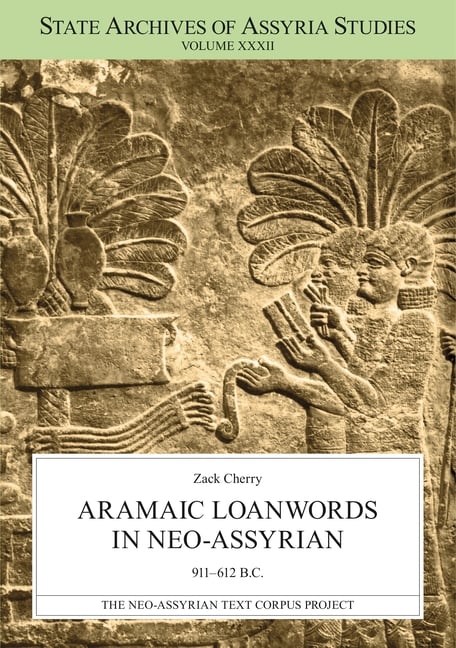
Aramaic Loanwords in Neo-Assyrian 911-612 B.C. - Paperback
Pay over time for orders over $35.00 with
Offers & Perks
Earn 76 points with this purchase
Added to your rewards balance after checkout.
100 points welcome bonus
Create an account and start with extra points.
This study identifies and analyzes Aramaic loanwords occurring in Neo-Assyrian texts between 911 and 612 B.C. As two Semitic languages, Neo-Assyrian and Aramaic are sibling-descendants of a postulated common ancestor, Proto-Semitic. The work provides information about the contact between the two languages and about the people who spoke them.
To achieve this scholarly objective, a total of 9,057 Neo-Assyrian texts of different genres were utilized. The study discusses 166 proposed Aramaic loanwords in Neo-Assyrian, which are evaluated according to phonological, morphological, and semantic criteria. The findings demonstrate that only 69 words are confirmed loanwords, and 50 are possible loanwords. Additionally, 47 words are rejected as possible Aramaic loanwords in Neo-Assyrian. The majority of the confirmed loanwords are attested in letters and legal and administrative documents from the seventh century B.C., stemming from the major Assyrian cities of Nineveh, Assur, and Calah. Most of the confirmed loanwords are nouns.
Aramaic was the lingua franca of the Neo-Assyrian Empire from the mid-eighth century B.C. onwards, and the loanwords analyzed provide evidence for the use of Aramaic in Assyria proper as well. The relatively small number of certain and possible loanwords, however, fails to support the impression that Aramaic was widespread as a vernacular language in Assyria proper, especially towards the end of the period studied. The evidence also corroborates the conclusion, based on the extant prosopographical data, that the predominantly Assyrian character was maintained in Assyria proper until the very end of the Assyrian Empire.
Zack Cherry is in the Department of Linguistics and Philology at Uppsala University.
Contributor(s)
Author
Free shipping on orders over $75. Standard shipping takes 3-7 business days. Eligible items may be returned within 30 days of delivery. Conditions apply.