
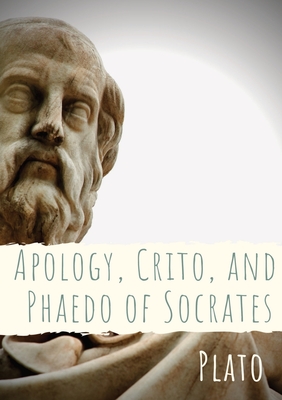
Apology, Crito, and Phaedo of Socrates: A dialogue depicting the trial, and is one of four Socratic dialogues, along with Euthyphro, Phaedo, and Crito - Paperback
by Plato
$14.99
$19.95
-25%Quantity
01
Pay over time for orders over $35.00 with
Offers & Perks
Earn 14 points with this purchase
Added to your rewards balance after checkout.
100 points welcome bonus
Create an account and start with extra points.
Availability:In StockContributor:Plato, Benjamin JowettTheme:Chronological Period/Ancient (To 499 A.D.)Publish date:10/19/2020Pages:122
Languages:EnglishPublisher:Les Prairies NumeriquesISBN-13:9782382748572ISBN-10:2382748575UPC:9782382748572Book Category:Non-Classifiable, History, PoetryBook Subcategory:Non-Classifiable, Ancient & ClassicalSize:8.27 x 5.83 x 0.29 inchesWeight:0.168Product ID:SCR40YW0CV
Apology, Crito, and Phaedo of Socrates
By Plato transl. Benjamin Jowett
- The Apology of Socrates by Plato is the Socratic dialogue that presents the speech of legal self-defence, which Socrates presented at his trial for impiety and corruption in 399 BC. Specifically, the Apology of Socrates is a defence against the charges of "corrupting the young" and "not believing in the gods in whom the city believes, but in other daimonia that are novel" to Athens. Crito is a dialogue by Plato. It depicts a conversation between Socrates and his wealthy friend Crito regarding justice, injustice, and the appropriate response to injustice. Socrates thinks that injustice may not be answered with injustice, and refuses Crito's offer to finance his escape from prison. This dialogue contains an ancient statement of the social contract theory of government. Ph do or Phaedo, also known to ancient readers as "On The Soul", is one of the best-known dialogues of Plato's middle period. The Phaedo, which depicts the death of Socrates, is also Plato's fourth and last dialogue to detail the philosopher's final days, following Euthyphro, Apology, and Crito. In the dialogue, Socrates discusses the nature of the afterlife on his last day before being executed by drinking hemlock.
- Each dialogue contains insights into Ancient Greek thought, and the culture of the society as a whole. All three of these texts use ordinary conversations as a means of conveying and evolving individual ideas. It is within these early texts that Socrates demonstrates his manner of gaining insight via asking questions - this Socratic method, whereby Socrates maintains an impression of ignorance - was to define the thought of Plato.ApologyIn this dialogue, Socrates makes his case to the Athenian people at his trial. Passionately arguing against the charges of impiety levied upon him, the philosopher uses logic, reason and his natural gifts of speech in attempting to convince the crowd against sentencing him to death. While unsuccessful, the margin of the vote was narrow - it is now that Socrates is taken to the cells, where his final conversations are to take place.CritoWhen speaking to Crito, a man from a wealthy local family, Socrates advances a number of points about justice and injustice. After Crito declares his admiration for Socrates peace of mind and collectiveness in the face of his death sentence, the two commence a philosophical debate.Together the pair draw a number of comparisons with society in order to reach a definition of what is just and unjust in the context of human living. The text makes a point of noting Crito's attempts at convincing Socrates to escape from prison and thus his death sentence - although such an escape might be arranged, Socrates refuses on the grounds that it is his duty as a citizen to face the death penalty.PhaedoOne of the most famous dialogues of Plato, in Phaedo we witness the final philosophic discussions which Socrates partakes in before dying. His friends and family are variously present, until the final death sentence - that of drinking a poison solution of hemlock - is carried out.
- The topics here range from the form and essential immortality of the soul, the nature of learning and memory, and the nature of life. It is here that Plato, with Socrates as his principle character, advances a number of philosophic arguments and ideas which were to evolve later in his writings. An iconic text, the death of Socrates remains one of the most pivotal and popularly known events in the history of philosophy.
Languages:EnglishPublisher:Les Prairies NumeriquesISBN-13:9782382748572ISBN-10:2382748575UPC:9782382748572Book Category:Non-Classifiable, History, PoetryBook Subcategory:Non-Classifiable, Ancient & ClassicalSize:8.27 x 5.83 x 0.29 inchesWeight:0.168Product ID:SCR40YW0CV
Free shipping on orders over $75. Standard shipping takes 3-7 business days. Eligible items may be returned within 30 days of delivery. Conditions apply.