
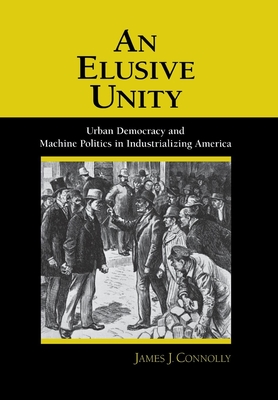
An Elusive Unity - Hardcover
Pay over time for orders over $35.00 with
Offers & Perks
Earn 63 points with this purchase
Added to your rewards balance after checkout.
100 points welcome bonus
Create an account and start with extra points.
Although many observers have assumed that pluralism prevailed in American political life from the start, inherited ideals of civic virtue and moral unity proved stubbornly persistent and influential. The tension between these conceptions of public life was especially evident in the young nation's burgeoning cities. Exploiting a wide range of sources, including novels, cartoons, memoirs, and journalistic accounts, James J. Connolly traces efforts to reconcile democracy and diversity in the industrializing cities of the United States from the antebellum period through the Progressive Era.
The necessity of redesigning civic institutions and practices to suit city life triggered enduring disagreements centered on what came to be called machine politics. Featuring plebian leadership, a sharp masculinity, party discipline, and frank acknowledgment of social differences, this new political formula first arose in eastern cities during the mid-nineteenth century and became a subject of national discussion after the Civil War. During the Gilded Age and Progressive Era, business leaders, workers, and women proposed alternative understandings of how urban democracy might work. Some tried to create venues for deliberation that built common ground among citizens of all classes, faiths, ethnicities, and political persuasions. But accommodating such differences proved difficult, and a vision of politics as the businesslike management of a contentious modern society took precedence. As Connolly makes clear, machine politics offered at best a quasi-democratic way to organize urban public life. Where unity proved elusive, machine politics provided a viable, if imperfect, alternative.
James J. Connolly is Professor of History and Director of the Center for Middletown Studies at Ball State University and the author of The Triumph of Ethnic Progressivism: Urban Political Culture in Boston, 1900-1925.
Contributor(s)
Author
Free shipping on orders over $75. Standard shipping takes 3-7 business days. Eligible items may be returned within 30 days of delivery. Conditions apply.