
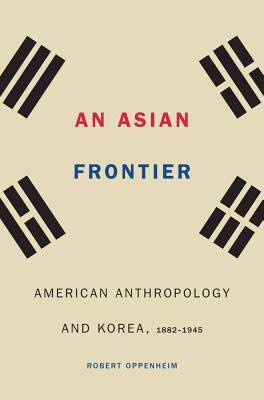
An Asian Frontier: American Anthropology and Korea, 1882-1945 - Hardcover
$74.99
$75.00
Quantity
01
Pay over time for orders over $35.00 with
Offers & Perks
Earn 74 points with this purchase
Added to your rewards balance after checkout.
100 points welcome bonus
Create an account and start with extra points.
Availability:In StockContributor:Robert OppenheimSeries:Critical Studies in the History of AnthropologyTheme:Cultural Region/Asian, Cultural Region/East AsianPublish date:6/1/2016Pages:450
Languages:EnglishPublisher:University of Nebraska PressISBN-13:9780803285613ISBN-10:0803285612UPC:9780803285613Book Category:Social Science, HistoryBook Subcategory:Anthropology, AsiaBook Topic:Cultural & Social, KoreaSize:9.00 x 6.00 x 1.13 inchesWeight:0.808Product ID:SCKFFHCV5D
In the nineteenth century the predominant focus of American anthropology centered on the native peoples of North America, and most anthropologists would argue that Korea during this period was hardly a cultural area of great anthropological interest. However, this perspective underestimates Korea as a significant object of concern for American anthropology during the period from 1882 to 1945--otherwise a turbulent, transitional period in Korea's history. An Asian Frontier focuses on the dialogue between the American anthropological tradition and Korea, from Korea's first treaty with the United States to the end of World War II, with the goal of rereading anthropology's history and theoretical development through its Pacific frontier. Drawing on notebooks and personal correspondence as well as the publications of anthropologists of the day, Robert Oppenheim shows how and why Korea became an important object of study--with, for instance, more published about Korea in the pages of American Anthropologist before 1900 than would be seen for decades after. Oppenheim chronicles the actions of American collectors, Korean mediators, and metropolitan curators who first created Korean anthropological exhibitions for the public. He moves on to examine anthropologists--such as Ales Hrdlicka, Walter Hough, Stewart Culin, Frederick Starr, and Frank Hamilton Cushing--who fit Korea into frameworks of evolution, culture, and race even as they engaged questions of imperialism that were raised by Japan's colonization of the country. In tracing the development of American anthropology's understanding of Korea, Oppenheim discloses the legacy present in our ongoing understanding of Korea and of anthropology's past.
Languages:EnglishPublisher:University of Nebraska PressISBN-13:9780803285613ISBN-10:0803285612UPC:9780803285613Book Category:Social Science, HistoryBook Subcategory:Anthropology, AsiaBook Topic:Cultural & Social, KoreaSize:9.00 x 6.00 x 1.13 inchesWeight:0.808Product ID:SCKFFHCV5D
Robert Oppenheim is an associate professor of Asian studies and anthropology at the University of Texas at Austin. He is the author of Kyongju Things: Assembling Place.
Publisher: University of Nebraska Press
Contributor(s)
Author
Free shipping on orders over $75. Standard shipping takes 3-7 business days. Eligible items may be returned within 30 days of delivery. Conditions apply.