
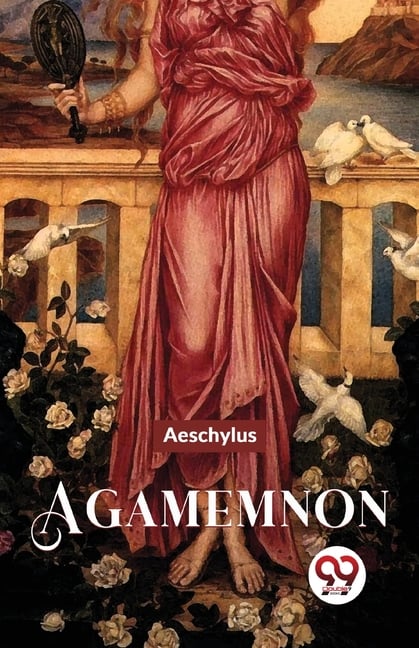
Agamemnon
$10.99
$13.99
-21%Choose Option
Paperback
$10.99
$13.99

Agamemnon
$10.99
$12.95
Quantity
01
Pay over time for orders over $35.00 with
Offers & Perks
Earn 10 points with this purchase
Added to your rewards balance after checkout.
100 points welcome bonus
Create an account and start with extra points.
Availability:In StockContributor:AeschylusTheme:Chronological Period/Ancient (To 499 A.D.), Cultural Region/GreecePublish date:5/1/2023Pages:70
Languages:EnglishPublisher:Double 9 BooksISBN-13:9789358712100ISBN-10:9358712104UPC:9789358712100Book Category:Drama, Literary Collections, MusicBook Subcategory:Ancient & Classical, Ancient, Classical & Medieval, Musical InstrumentsSize:8.50 x 5.50 x 0.17 inchesWeight:0.1Product ID:SCX8713ZPB
The Greek city of Argos is waiting for word of the triumph during the Trojan War, and a watchman is posted to send out a signal when it does. The Chorus, an assembly of Argive elders, is informed by the Argive queen Clytemnestra that the city has been taken. Mycenaean king Agamemnon returns with Cassandra, a prophetess from Troy. He thanks the gods for keeping him safe and swears to work with the Chorus to build democracy. Cassandra predicts that Clytemnestra would kill her and Agamemnon when she enters the palace to carry out the deed. Regarding the prophetess' visions, the Chorus is hesitant. Cassandra walks inside the palace knowing that she would shortly be put to death. Screams from the palace stop the Chorus as they are going to talk on how destiny is inevitable. Agamemnon and Cassandra were slain by Clytemnestra, who then reappears with blood on her hands. The murder of Agamemnon, according to her, was motivated by retaliation for the sacrifice of their daughter Iphigenia. Agamemnon's cousin Aegisthus makes an appearance, praising the vengeance and defending it as payback for earlier wrongdoings. The Chorus is prepared to die as soon as he exerts his dominance over them. As soldiers round the entrance and the Chorus disperses, the play comes to a close with Clytemnestra and Aegisthus returning to the palace as Argos' new rulers.
Languages:EnglishPublisher:Double 9 BooksISBN-13:9789358712100ISBN-10:9358712104UPC:9789358712100Book Category:Drama, Literary Collections, MusicBook Subcategory:Ancient & Classical, Ancient, Classical & Medieval, Musical InstrumentsSize:8.50 x 5.50 x 0.17 inchesWeight:0.1Product ID:SCX8713ZPB
Aeschylus: - Aeschylus, also known as the father of tragedy, was an ancient Greek playwright born in Eleusis, near Athens, around 525/524 BC. He came from a wealthy family and began acting in tragedies in Athens in 499 BC. He achieved his first success in 484 BC and went on to write grandiose, complex plays dealing with themes such as justice, the will of the gods, and human action consequences. He is credited with revolutionizing Greek drama by introducing the second actor to the stage. Aeschylus believed devoutly in the power of the gods, and his plays often reflected this belief. He served in the Athenian army during the Persian Wars and wrote plays based on these events, including The Persians. He passed away in Gela, Sicily, in 456/455 BC. Despite his death, his significant legacy in the world of drama continued, and his works remained popular and performed long after he was gone.
Publisher: Double 9 Books
Free shipping on orders over $75. Standard shipping takes 3-7 business days. Eligible items may be returned within 30 days of delivery. Conditions apply.