
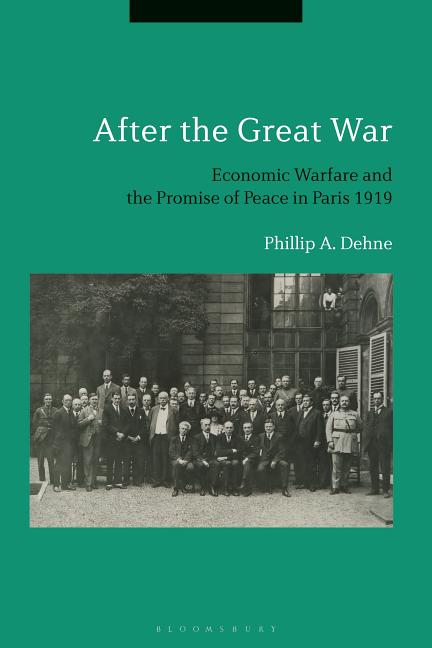
After the Great War: Economic Warfare and the Promise of Peace in Paris 1919 - Hardcover
$175.99
Quantity
01
Pay over time for orders over $35.00 with
Offers & Perks
Earn 175 points with this purchase
Added to your rewards balance after checkout.
100 points welcome bonus
Create an account and start with extra points.
Availability:In StockContributor:Phillip DehneTheme:Chronological Period/1900-1919, Chronological Period/20th CenturyPublish date:6/13/2019Pages:312
Languages:EnglishPublisher:Bloomsbury Publishing PLCISBN-13:9781350087040ISBN-10:1350087041UPC:9781350087040Book Category:HistoryBook Subcategory:Wars & Conflicts, ModernBook Topic:World War I, 20th CenturySize:9.30 x 6.30 x 0.80 inchesWeight:0.568Product ID:SCBGRPFTZX
At the Paris Peace Conference of 1919, the international community came together to find a way forward in the aftermath of the First World War. The conference is often judged a failure, as the resulting Treaty of Versailles did not bring long-term peace with Germany. By following the activities of British delegate and wartime Minister of Blockade Lord Robert Cecil, this book examines the struggles and successes of the conference, as delegates from around the world grappled with the economic, political and humanitarian catastrophes overwhelming Europe in 1919.
After the Great War describes, for the first time, the significant role of economic warfare at the Peace Conference and in the post-war settlement. Lord Cecil's sometimes difficult partnership with US President Woodrow Wilson forged a new, permanent, international diplomatic organization - the League of Nations - and supplied it with the power to create collective blockades against aggressive states. Leaders of the Allied economic war before the Armistice became, in Paris, leaders of humanitarian-minded international outreach to their former enemies in Germany and Austria. After the Great War promotes a new understanding of these underappreciated internationalists in Paris, many of whom transitioned into leading the League of Nations even before the Peace Conference ended. Often derided as an idealistic fantasy, international peace enforced by economic sanctions appeared a realistic possibility when the Treaty was signed at the end of June 1919.
After the Great War describes, for the first time, the significant role of economic warfare at the Peace Conference and in the post-war settlement. Lord Cecil's sometimes difficult partnership with US President Woodrow Wilson forged a new, permanent, international diplomatic organization - the League of Nations - and supplied it with the power to create collective blockades against aggressive states. Leaders of the Allied economic war before the Armistice became, in Paris, leaders of humanitarian-minded international outreach to their former enemies in Germany and Austria. After the Great War promotes a new understanding of these underappreciated internationalists in Paris, many of whom transitioned into leading the League of Nations even before the Peace Conference ended. Often derided as an idealistic fantasy, international peace enforced by economic sanctions appeared a realistic possibility when the Treaty was signed at the end of June 1919.
Languages:EnglishPublisher:Bloomsbury Publishing PLCISBN-13:9781350087040ISBN-10:1350087041UPC:9781350087040Book Category:HistoryBook Subcategory:Wars & Conflicts, ModernBook Topic:World War I, 20th CenturySize:9.30 x 6.30 x 0.80 inchesWeight:0.568Product ID:SCBGRPFTZX
Free shipping on orders over $75. Standard shipping takes 3-7 business days. Returns accepted within 30 days of purchase.