
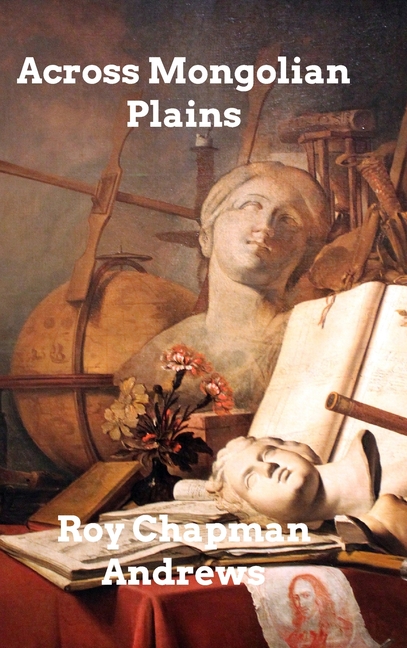
Across Mongolian Plains - Hardcover
$27.99
$29.99
-7%Choose Option
Hardcover
$27.99
$29.99

Across Mongolian Plains
$8.99
Quantity
01
Pay over time for orders over $35.00 with
Offers & Perks
Earn 27 points with this purchase
Added to your rewards balance after checkout.
100 points welcome bonus
Create an account and start with extra points.
Availability:In StockContributor:Roy Chapman AndrewsTheme:Cultural Region/ChinesePublish date:1/29/2026Pages:166
Languages:EnglishPublisher:BlurbISBN-13:9798211440197UPC:9798211440197Book Category:Literary Collections, Biography & Autobiography, Sports & RecreationSize:9.00 x 6.00 x 0.44 inchesWeight:0.395Product ID:SC89GEDRG2
In 1920, Andrews began planning for expeditions to Mongolia and drove a fleet of Dodge cars westward from Peking. In 1922, the party discovered a fossil of Indricotherium (then named "Baluchitherium"), a gigantic hornless rhinoceros, which was sent back to the museum, arriving on December 19. The fossil species Andrewsarchus was named after him. Andrews, along with Henry Fairfield Osborn, was a proponent of the Out of Asia theory of humanity's origins and led several expeditions to Asia from 1922 to 1928 known as the "Central Asiatic Expeditions" to search for the earliest human remains in Asia. The expeditions did not find human remains. However, Andrews and his team made many other finds (January 26, 1884 - March 11, 1960) was an American explorer, adventurer and naturalist who became the director of the American Museum of Natural History. He led a series of expeditions through the politically disturbed China of the early 20th century into the Gobi Desert and Mongolia. The expeditions made important discoveries and brought the first-known fossil dinosaur eggs to the museum. Chapman's popular writing about his adventures made him famous. In 1920, Andrews began planning for expeditions to Mongolia and drove a fleet of Dodge cars westward from Peking. In 1922, the party discovered a fossil of Indricotherium (then named "Baluchitherium"), a gigantic hornless rhinoceros, which was sent back to the museum, arriving on December 19. The fossil species Andrewsarchus was named after him. Andrews, along with Henry Fairfield Osborn, was a proponent of the Out of Asia theory of humanity's origins and led several expeditions to Asia from 1922 to 1928 known as the "Central Asiatic Expeditions" to search for the earliest human remains in Asia. The expeditions did not find human remains. However, Andrews and his team made many other finds, including dinosaur bones and fossil mammals and the first nests full of dinosaur eggs ever discovered. Andrews' account of these expeditions
Languages:EnglishPublisher:BlurbISBN-13:9798211440197UPC:9798211440197Book Category:Literary Collections, Biography & Autobiography, Sports & RecreationSize:9.00 x 6.00 x 0.44 inchesWeight:0.395Product ID:SC89GEDRG2
Free shipping on orders over $75. Standard shipping takes 3-7 business days. Eligible items may be returned within 30 days of delivery. Conditions apply.