
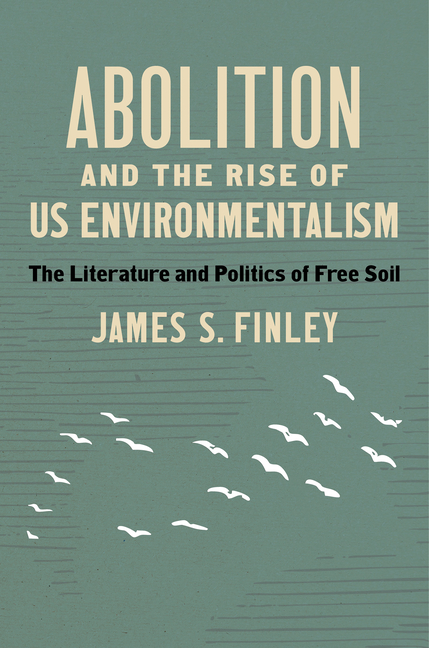
Abolition and the Rise of Us Environmentalism: The Literature and Politics of Free Soil - Paperback
$39.99
Choose Option
Paperback
$39.99
$39.95

Hardcover
$108.99
Quantity
01
Pay over time for orders over $35.00 with
Offers & Perks
Earn 39 points with this purchase
Added to your rewards balance after checkout.
100 points welcome bonus
Create an account and start with extra points.
Availability:In StockContributor:James S. FinleyTheme:Ethnic Orientation/African AmericanPublish date:8/11/2026Pages:238
Languages:EnglishPublisher:University of North Carolina PressISBN-13:9781469694306ISBN-10:1469694301UPC:9781469694306Book Category:Literary Criticism, Political Science, Social ScienceBook Subcategory:American, Public Policy, Cultural & Ethnic StudiesBook Topic:Environmental Policy, African American & Black StudiesSize:9.21 x 6.14 x 0.54 inchesWeight:0.341Product ID:SC8KB9ZJ55
By the 1840s, many Americans recognized that the institution of slavery was destroying Southern landscapes while threatening to expand into the West. An increasing number of white Northerners believed that surrounding areas where slavery was legal with so-called free soil would hasten its collapse and forestall an environmental crisis. James S. Finley addresses this understudied intersection of US antislavery and environmental politics in the two decades before the Civil War, arguing that the debate over free soil--what it should look like and who should have access to this land--was an underrecognized precursor of modern American environmentalist movements.
Through the work of a group of Black writers and thinkers, the Free-Soil movement's white supremacist underpinnings were challenged by an ecosocial vision that centered democratic communities and sustainable labor. By analyzing the output of authors who advocated for truly free soil, such as Frederick Douglass and Henry Highland Garnet, Finley finds commonalities in their attempts to reenvision communal relations between individuals and the land with contemporary movements for racial and environmental justice.
Through the work of a group of Black writers and thinkers, the Free-Soil movement's white supremacist underpinnings were challenged by an ecosocial vision that centered democratic communities and sustainable labor. By analyzing the output of authors who advocated for truly free soil, such as Frederick Douglass and Henry Highland Garnet, Finley finds commonalities in their attempts to reenvision communal relations between individuals and the land with contemporary movements for racial and environmental justice.
Languages:EnglishPublisher:University of North Carolina PressISBN-13:9781469694306ISBN-10:1469694301UPC:9781469694306Book Category:Literary Criticism, Political Science, Social ScienceBook Subcategory:American, Public Policy, Cultural & Ethnic StudiesBook Topic:Environmental Policy, African American & Black StudiesSize:9.21 x 6.14 x 0.54 inchesWeight:0.341Product ID:SC8KB9ZJ55
James S. Finley is associate professor of English at Texas A&M University-San Antonio.
Publisher: University of North Carolina Press
Contributor(s)
Author
Free shipping on orders over $75. Standard shipping takes 3-7 business days. Eligible items may be returned within 30 days of delivery. Conditions apply.