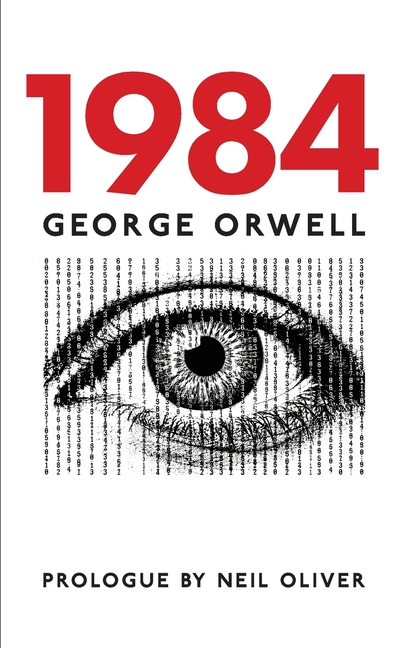
Orwell, George: - George Orwell (1903-1950), born Eric Arthur Blair in Motihari, British India, was one of the twentieth century's most influential writers and political thinkers. Educated at Eton College, he chose not to attend university, instead joining the Indian Imperial Police in Burma. His experiences there left him deeply critical of imperialism, prompting his resignation and inspiring works such as Burmese Days.Returning to England, Orwell lived among the poor in London and Paris, experiences he later chronicled in Down and Out in Paris and London (1933). Throughout his life, he sought to understand the realities of poverty, injustice, and political oppression through firsthand experience. He also fought in the Spanish Civil War with the Republican forces, where witnessing political infighting and totalitarian practices profoundly shaped his views on authoritarianism.Orwell's clear, direct prose and unwavering commitment to truth earned him a lasting reputation as both a novelist and essayist. His allegorical novella Animal Farm (1945) exposed the corruption of revolutionary ideals under Soviet communism, while his final novel, Nineteen Eighty-Four (1949), presented a chilling vision of a society dominated by surveillance, censorship, propaganda, and the manipulation of language. Concepts such as "Big Brother," "thoughtcrime," and "Newspeak" have since entered everyday language as enduring warnings about the abuse of power.Despite suffering from tuberculosis, Orwell completed Nineteen Eighty-Four while living on the remote Scottish island of Jura. The novel was published just months before his death in London on 21 January 1950, aged forty-six.More than seventy-five years later, Orwell's work continues to resonate across the world. His writing remains a powerful defence of intellectual honesty, freedom of thought, and freedom of expression, reminding readers that democracy and liberty depend upon the courage to question authority, resist propaganda, and defend objective truth.Oliver, Neil: - Neil Oliver is an acclaimed television presenter, author, journalist and archaeologist, best known for bringing British history and archaeology to a wide audience through television. Born in 1967 in Renfrewshire, Scotland, he studied archaeology at the University of Glasgow before beginning a career as a journalist.Oliver first came to national prominence in 2002 as one of the principal presenters of the BBC documentary series Coast. His engaging style, distinctive narration and ability to connect landscapes with the people who shaped them made the programme one of the BBC's most successful factual series. He later presented numerous history and archaeology documentaries, including A History of Scotland, Vikings, The Last Explorers, Sacred Wonders of Britain and Civilisations.Alongside his broadcasting career, Oliver has written extensively on history, archaeology and historical fiction. His books explore Britain's past and the enduring influence of landscapes on national identity. His work reflects a longstanding interest in uncovering the stories behind familiar places and examining how history continues to shape the present.In recent years, Oliver has become a well-known commentator on contemporary political and social issues. During and after the Covid-19 pandemic, he attracted significant public attention for expressing strong views on government policy, civil liberties and freedom of expression. His commentaries, delivered through television appearances, online platforms and public speaking engagements, have generated strong support from around the world.Throughout a career spanning more than three decades, Neil Oliver has remained a prominent public figure, combining historical storytelling with contemporary commentary. Whether presenting documentaries, writing books or participating in public debate, he continues to encourage audiences to explore Britain's past while engaging with questions about its present and future. His distinctive voice and passion for history have made him one of Britains best-known broadcasters.