
Astronomy Books
Astronomy books explore the observation and study of celestial objects — from planets and stars to galaxies and distant nebulae. Rather than focusing solely on physics, this category emphasizes how we observe, classify, and understand the visible universe. If you're fascinated by telescopes, constellations, planetary systems, or space exploration, discover our Astronomy Books collection and explore expert guides that bring the night sky into focus.
Astronomy is one of the oldest sciences, rooted in careful observation of the sky. Today, it combines modern technology, space missions, and advanced imaging to expand our understanding of the cosmos.
The night sky is a map of discovery.

Why Readers Turn to Astronomy Books
Readers choose astronomy books to learn how to observe and understand the universe. Common interests include:
-
Stargazing and telescope use
-
Planets and the solar system
-
Constellations and star charts
-
Deep-sky objects such as nebulae and galaxies
-
Space missions and exploration
These books range from beginner-friendly guides to advanced observational manuals.
What Defines Astronomy
Astronomy typically includes several major areas:
-
Observational Astronomy
Using telescopes and instruments to study celestial objects -
Planetary Science
Study of planets, moons, and solar system bodies -
Stellar Astronomy
Classification and lifecycle of stars -
Galactic and Extragalactic Astronomy
Structure and behavior of galaxies
Together, these fields help chart and describe the universe.

Key Themes in Astronomy Books
This collection may include works exploring themes such as:
-
The Solar System
Planets, asteroids, and comets -
Stars and Constellations
Identification and stellar evolution basics -
Galaxies and Nebulae
Large-scale cosmic structures -
Space Exploration
Satellites, probes, and human spaceflight -
Astronomical Observation Techniques
Telescopes, astrophotography, and sky mapping
These themes make astronomy accessible to both hobbyists and students.
Stargazing and Practical Observation
Many astronomy books focus on hands-on sky observation. Topics often include:
-
Choosing and using telescopes
-
Reading star charts
-
Tracking planetary motion
-
Identifying constellations by season
-
Observing meteor showers and eclipses
Practical guides help readers connect theory to real-world sky viewing.
Planets and the Solar System
Astronomy books frequently explore our cosmic neighborhood. Common topics include:
-
Planetary formation
-
Moons and rings
-
Dwarf planets and Kuiper Belt objects
-
Solar activity and sunspots
-
Space missions to Mars and beyond
Studying the solar system provides insight into planetary science and habitability.

5 Popular Astronomy Books
If you’re looking for influential and widely read titles in astronomy, these books are frequently recommended:
-
Cosmos – Carl Sagan
Classic exploration of astronomy and scientific discovery -
NightWatch – Terence Dickinson
Practical guide to stargazing and telescope use -
Turn Left at Orion – Guy Consolmagno & Dan M. Davis
Step-by-step observing guide for beginners -
The Universe in a Nutshell – Stephen Hawking
Accessible overview of space and cosmology -
Astrophysics for People in a Hurry – Neil deGrasse Tyson
Clear introduction to modern space science
These titles range from observational guides to broad scientific overviews.
How to Choose the Right Astronomy Book
The right astronomy book depends on your experience and interests. Consider whether you’re seeking:
-
Beginner stargazing guides
-
Telescope and equipment manuals
-
Planetary science resources
-
Deep-sky object exploration
-
Space history and exploration narratives
Choosing by purpose and skill level helps narrow your selection.
Reading Astronomy Thoughtfully
Astronomy books are often enhanced by direct observation. Many readers benefit from:
-
Observing the night sky regularly
-
Using star maps and apps
-
Recording observations
-
Comparing seasonal constellations
-
Following current space missions
Active engagement deepens appreciation of the cosmos.
Summary
Astronomy books explore the observation and understanding of the universe.
-
Study of planets, stars, and galaxies
-
Guidance for stargazing and telescope use
-
Insight into space exploration and celestial mechanics
-
Accessible entry into cosmic discovery
If you want to explore the night sky and understand the objects beyond Earth, discover our Astronomy Books collection and explore guides that illuminate the universe above.

FAQs
What is astronomy?
Astronomy is the scientific study of celestial objects such as stars, planets, galaxies, and other phenomena in space.
Are astronomy books good for beginners?
Yes. Many titles are designed specifically for new stargazers and hobbyists.
Do astronomy books require advanced math?
Most introductory astronomy books focus on observation and concepts rather than complex mathematics.
What’s the difference between astronomy and astrophysics?
Astronomy emphasizes observation and classification of celestial objects, while astrophysics focuses on the physical laws that explain them.
Why study astronomy?
Astronomy expands our understanding of the universe, inspires curiosity, and connects human history with cosmic exploration.
4877 Results
4877 Results
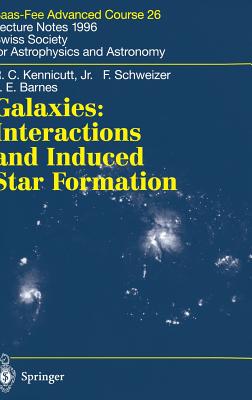
Galaxies: Interactions and Induced Star Formation: Saas-Fee Advanced Course 26. Lecture Notes 1996 Swiss Society for Astrophysics and Astronomy
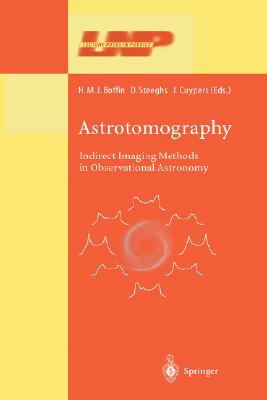
Astrotomography: Indirect Imaging Methods in Observational Astronomy
Modern Challenges in Quantum Optics: Selected Papers of the First International Meeting in Quantum Optics Held in Santiago, Chile, 13-16 August 2000
Near-Field Optics and Surface Plasmon Polaritons
Sources and Detection of Dark Matter and Dark Energy in the Universe: Fourth International Symposium Held at Marina del Rey, Ca, USA February 23-25, 2
The Astrophysics of Galactic Cosmic Rays: Proceedings of Two Issi Workshops, 18-22 October 1999 and 15-19 May 2000, Bern, Switzerland
Solar Variability and Climate: Proceedings of an Issi Workshop, 28 June-2 July 1999, Bern, Switzerland
Optical Detectors for Astronomy II: State-Of-The-Art at the Turn of the Millennium
From Dust to Terrestrial Planets: Proceedings of an Issi Workshop, 15-19 February 1999, Bern, Switzerland

The Non-Sleeping Universe: Proceedings of Two Conferences On: 'Stars and the Ism' Held from 24-26 November 1997 and On: 'From Galaxies to the Horizon'
Interball in the Istp Program: Studies of the Solar Wind-Magnetosphere-Ionosphere Interaction
Plasma Physics: Proceedings of the 1997 Latin American Workshop (VII Lawpp 1997), Held in Caracas, Venezuela, January 20-31, 1997
Motions in the Solar Atmosphere: Proceedings of the Summerschool and Workshop Held at the Solar Observatory Kanzelhöhe Kärnten, Austria, September 1-1

Observational Plasma Astrophysics: Five Years of Yohkoh and Beyond
In Search of Planet Vulcan: The Ghost in Newton's Clockwork Universe

History of Original Ideas and Basic Discoveries in Particle Physics
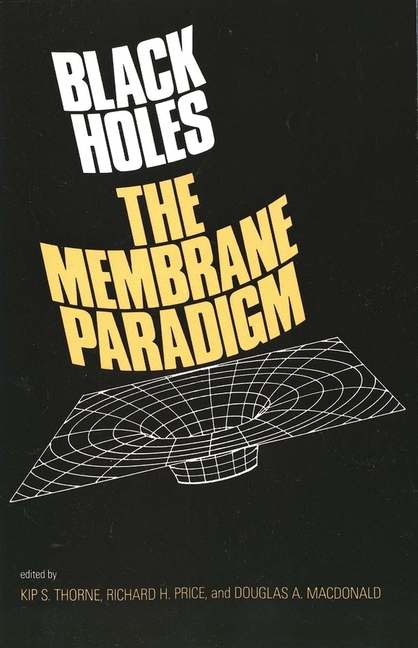

Venus Revealed: A New Look Below the Clouds of Our Mysterious Twin Planet

The Accelerating Universe: Infinite Expansion, the Cosmological Constant, and the Beauty of the Cosmos
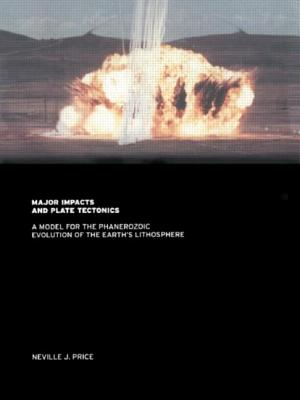
Major Impacts and Plate Tectonics: A Model for the Phanerzoic Evolution of the Earth's Lithosphere

Starbriefs 2001: A Dictionary of Abbreviations, Acronyms and Symbols in Astronomy, Related Space Sciences and Other Related Fields
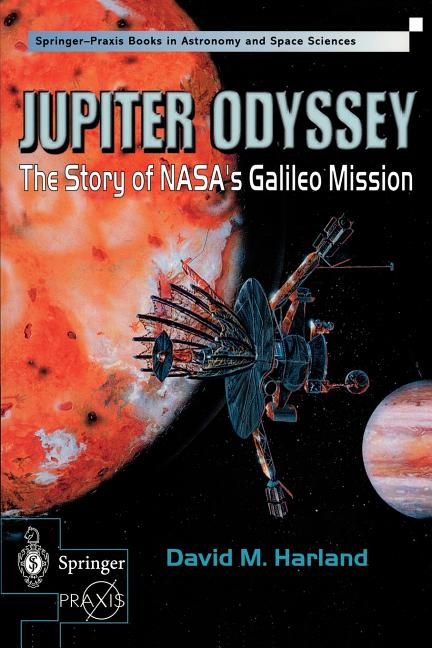


Cosmic Strings and Other Topological Defects
![Satellite Orbits: Models, Methods and Applications [With CDROM]](https://cdn.shopify.com/s/files/1/0831/4771/8930/files/img_1d09b2ce-6ed5-47c1-b89f-ec3f21006719.jpg?v=1730258018&width=100&crop=center)
Satellite Orbits: Models, Methods and Applications [With CDROM]



Revolution and Pedagogy: Interdisciplinary and Transnational Perspectives on Educational Foundations

![Structures in Space: Hidden Secrets of the Deep Sky [With CD-ROM]](https://img.surprisecastle.com/img/ibdw/IBImagesNew/1658/9781852331658.jpg)