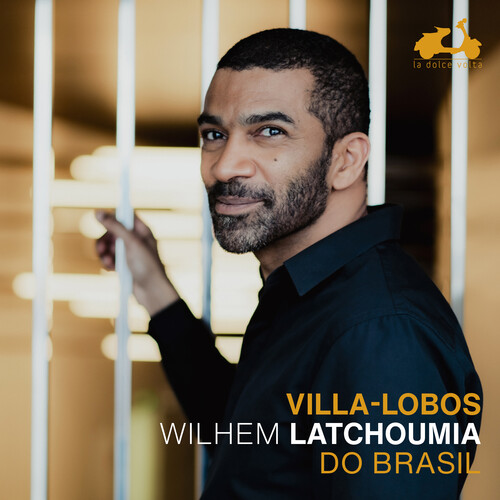
Heitor Villa-Lobos was a key figure in twentieth-century Brazilian music, an instinctive creator with a luxuriant imagination, at once provocative and conformist. He forged a personal style by founding his idiom on the melodic and rhythmic traditions of his country and enriching it with all the innovations he found among his contemporaries. His protean music captivates the listener with the diversity of it's aesthetic orientations, which exalt his ardent patriotism and find expression in vast epic scores or, on the contrary, in delicious, piquant miniatures. A champion of contrast and surprise, Villa-Lobos looks equally to the spirits of his ancestors and the primeval forces of nature in his native Brazil, a penchant that earned him the sobriquet 'White Indian'. Deeply committed to the musical education of young people, he introduced into his piano works many folksongs, often collected by himself, to serve as a support for three cycles that are veritable keyboard encyclopaedias: Guia prático (Practical guide), A próle do bébé (The baby's family) and Cirandas (Round dances). Among his other works for piano solo are Bachianas brasileiras no.4, Chôro no.5, and the magnificent Ciclo brasileiro, the last-named of which Wilhem Latchoumia recorded in 2008 in a program entitled Impressões that also included works by Guastavino and Ginastera.
Free shipping on orders over $75. Standard shipping takes 3-7 business days. Returns accepted within 30 days of purchase.
Heitor Villa-Lobos was a key figure in twentieth-century Brazilian music, an instinctive creator with a luxuriant imagination, at once provocative and conformist. He forged a personal style by founding his idiom on the melodic and rhythmic traditions of his country and enriching it with all the innovations he found among his contemporaries. His protean music captivates the listener with the diversity of it's aesthetic orientations, which exalt his ardent patriotism and find expression in vast epic scores or, on the contrary, in delicious, piquant miniatures. A champion of contrast and surprise, Villa-Lobos looks equally to the spirits of his ancestors and the primeval forces of nature in his native Brazil, a penchant that earned him the sobriquet 'White Indian'. Deeply committed to the musical education of young people, he introduced into his piano works many folksongs, often collected by himself, to serve as a support for three cycles that are veritable keyboard encyclopaedias: Guia prático (Practical guide), A próle do bébé (The baby's family) and Cirandas (Round dances). Among his other works for piano solo are Bachianas brasileiras no.4, Chôro no.5, and the magnificent Ciclo brasileiro, the last-named of which Wilhem Latchoumia recorded in 2008 in a program entitled Impressões that also included works by Guastavino and Ginastera.